 EN
EN

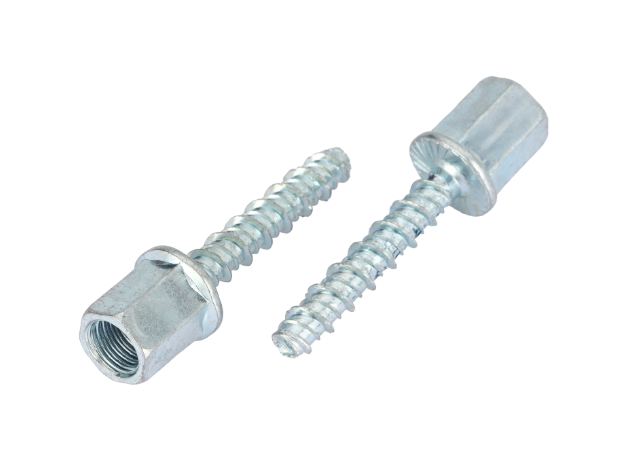
What Makes a Bolt 'High Tensile'? Grades, Standards, and the 800 MPa Threshold
Decoding High Tensile Bolt Grades (8.8, 10.9, 12.9) and Their Minimum Tensile Strengths
Bolts get labeled as high tensile once they hit that magic number of 800 MPa for minimum ultimate tensile strength, which most engineers around the world consider reliable enough for serious structural work. According to ISO 898-1 standards, these metric bolts come with a special two digit code. Take the first number and multiply it by 100 to find out what kind of tensile strength we're talking about in MPa terms. Then look at the second digit, multiply that by ten, and that tells us the yield strength compared to total tensile strength as a percentage. Makes sense? Not really until you see it on actual hardware specs sheets!
- Grade 8.8: 800 MPa tensile strength, 640 MPa yield strength (80% ratio); suitable for general structural use like building frames and equipment bases.
- Grade 10.9: 1040 MPa tensile strength, 940 MPa yield strength (90% ratio); achieved through alloy steels such as chromium-molybdenum and used in high-stress joints like crane booms or rotor assemblies.
- Grade 12.9: 1200 MPa tensile strength, 1100 MPa yield strength (90% ratio); produced via precise quenching and tempering of high-carbon alloy steels, reserved for extreme-duty applications including mining conveyors and aerospace subassemblies.
Selection hinges on load type, safety margins, and service environment—not just strength. Over-specifying higher grades without corresponding design justification can increase brittleness and hydrogen embrittlement risk.
Key International Standards for High Tensile Bolts: ISO 898-1, ASTM A325/A490, and ASTM A354
Global interoperability and safety depend on harmonized standards that govern material composition, mechanical performance, and traceability. ISO 898-1 sets the benchmark for metric high tensile bolts, specifying chemical limits, heat treatment requirements, and mandatory testing—including tensile, hardness, and proof load validation.
In North America, ASTM standards align closely with ISO grades but reflect legacy naming and application-specific criteria:
- ASTM A325: Structural bolts equivalent to ISO 8.8 (minimum 827 MPa tensile), widely used in steel-framed buildings and bridges.
- ASTM A490: High-strength structural bolts matching ISO 10.9 (minimum 1035 MPa tensile), mandated for critical connections in seismic zones or heavy industrial structures.
- ASTM A354: Quenched-and-tempered alloy steel bolts in Grades BC (equivalent to 10.9) and BD (equivalent to 12.9), designed for applications requiring superior fatigue resistance and elevated temperature stability.
All three ASTM standards require head markings for full material traceability—ensuring accountability from mill to installation—and prohibit substitutions without engineering approval.
Material Selection for High Tensile Bolts in Extreme Mechanical and Environmental Conditions
Alloy Steels (42CrMo, B7, 40CrNiMo): Optimizing Yield Strength, Toughness, and Fatigue Resistance
When it comes to bolts that need real strength, alloy steels are basically what makes them work so well when money isn't the main concern. Take those chromium molybdenum alloys for instance, specifically the 42CrMo type listed under ISO standards as grades 10.9 and 12.9. These materials can handle tensile forces exceeding 1,040 MPa after going through proper heat treatment processes involving careful quenching followed by tempering. What this means practically is that we get bolts with good balance between being strong enough without becoming brittle, plus they resist breaking down from repeated stress cycles. This combination works great in applications where parts keep moving against each other like in heavy machinery such as excavator arms or inside the complex gear systems found in modern wind turbines.
ASTM A193 B7, which contains chromium molybdenum, keeps good strength even when temperatures reach around 450 degrees Celsius. That's why it's commonly used for boiler flanges and steam pipes in coal fired power stations. When things get really cold, below minus 50 degrees Celsius, engineers turn to 40CrNiMo alloys instead. The nickel content helps refine the grain structure, so these materials stay tough enough to handle impacts without breaking apart suddenly. This matters a lot for liquefied natural gas tanks and their transportation systems. Adding small amounts of vanadium during processing makes the austenite grains smaller during heating treatments. This simple addition stops cracks from starting and makes components last longer under repeated stress, something that's particularly important for structures supporting offshore wind turbines on the ocean floor.
Stainless and Special Alloys for Corrosive or Cryogenic High-Stress Applications
Carbon and low alloy steels just don't cut it anymore when faced with corrosion issues or really harsh temperature extremes. That's where specialized materials come into play, balancing both strength requirements and the need to withstand tough environments. Take austenitic stainless steels for instance, those types like A2-304 and A4-316 according to ISO 3506 standards. They stand up pretty well against corrosion most of the time. However there's a catch. These same steels start losing over half their strength at around 400 degrees Celsius compared to what they can handle at normal temperatures. So practically speaking, these materials work best under regular conditions or maybe slightly warmer situations rather than high heat applications.
For harsher service:
- Duplex stainless steels (e.g., UNS S32205/S32304) combine 22–25% chromium with 4–6% nickel and nitrogen to deliver ~550 MPa yield strength and exceptional chloride stress-corrosion cracking resistance—making them ideal for offshore oil & gas platforms and desalination plants.
- Titanium Grade 5 (Ti-6Al-4V) provides 895 MPa tensile strength at roughly half the density of steel, enabling high-strength, lightweight fastening in seawater-exposed aerospace and marine propulsion systems.
- Nickel-based superalloys like Inconel 718, certified to ASTM B637, retain over 90% of their room-temperature strength at 700°C while resisting oxidation and creep—outperforming carbon steels by 300% in long-term creep rupture tests under nuclear reactor operating conditions.
Matching High Tensile Bolts to Critical Infrastructure Demands
Wind Turbines & Bridges: Ensuring Preload Retention and Fatigue Life Under Dynamic Loads
Bolts used in wind turbines and those massive long-span bridges face something like millions of load cycles across decades of operation. These components need more than just brute strength they require outstanding ability to maintain their initial tension, resist fractures, and withstand repeated stress without breaking down. Take turbine towers for instance. The bolts there have to keep holding everything together even when dealing with constant twisting vibrations, bending forces from strong winds, and temperature changes that can warp materials. When this clamping force starts to fade, it creates problems like parts slipping against each other, tiny surface wear called fretting, and eventually complete structural failure. Suspension bridges tell a similar story. Their anchor points deal with all sorts of traffic-related stress fluctuations day after day. Without enough material toughness in these critical bolts, small cracks start forming and spreading much faster than expected under normal conditions.
In most cases, grades 10.9 and ASTM A490 have become industry standards because they offer excellent yield strength and perform really well during fatigue tests that go beyond ten million cycles at stress ratios around 0.1. When we look at offshore environments though, things get complicated fast. The constant exposure to salty air and seawater splashing means regular bolts just won't cut it anymore. That's why engineers typically specify either duplex stainless steel options or those special Geomet® coated A490 bolts. These materials help maintain structural strength while fighting off rust and degradation, all while keeping that critical clamping power intact even under harsh marine conditions.
Power Plants & Heavy Machinery: Managing Thermal Cycling, Creep, and Joint Integrity
When components go through repeated heating and cooling cycles, different materials expand and contract at varying rates. This mismatch between bolts and flanges can lead to relaxation issues and potential leaks in pressurized equipment. The problem gets worse when temperatures stay above 540 degrees Celsius for extended periods. At these levels, creep deformation takes over. Even if stress stays below yield limits, bolts will slowly stretch out over time. As they elongate, the clamping force decreases, which puts the whole joint at risk. This is particularly concerning for critical applications like steam turbine assemblies, boiler header connections, and those massive reactors found in petrochemical plants where failure isn't just costly but potentially dangerous.
ASTM A354 Grade BD bolts, usually fabricated from 42CrMo or comparable chromium-molybdenum-vanadium alloys, are designed specifically to withstand creep deformation and retain their strength even when exposed to temperature fluctuations. When installing these bolts, proper torque calibration is essential. Many installations also call for hot tightening procedures because different materials expand at varying rates when heated. The problem becomes especially pronounced in equipment like coal crushers and hydraulic presses where repeated impact loading leads to microscopic slippage between threads. This tiny movement creates what engineers call fretting wear over time. To combat this issue, maintenance teams often install hardened Belleville washers and apply molybdenum disulfide lubricant on the threads. These measures help cut down on friction while still keeping the bolt tension stable under operational stress conditions.
Corrosion Protection Strategies for Long-Term Reliability of High Tensile Bolts
Galvanization, Zinc Plating, and Geomet® Coatings: Performance Trade-offs and Hydrogen Embrittlement Risks
Corrosion protection must never compromise the mechanical integrity of high tensile bolts—especially those graded 10.9 and above, which are highly susceptible to hydrogen embrittlement.
- Hot-dip galvanizing provides thick, durable zinc-iron alloy layers offering excellent barrier protection in marine or rural environments—but adds dimensional variation that may interfere with tight-tolerance assemblies and requires post-coating threading for precision fits.
- Electrolytic zinc plating is economical and uniform, but thinner coatings degrade faster in acidic or saline exposure; it remains common for indoor or sheltered structural use.
- Geomet®-type coatings (zinc/aluminum flake systems per ISO 10683 or ASTM F1941) deliver superior salt-spray resistance (>1,000 hours to white rust per ASTM B117) with minimal thickness change, preserving fit and function—ideal for offshore and transportation infrastructure.
All electroplating processes bring atomic hydrogen into the steel structure. When it comes to preventing delayed brittle fractures, there's a specific requirement for bolts rated at grade 10.9 or higher. These need to go through a baking process after plating. The temperature range should be between 190 and 230 degrees Celsius, and the duration needs to be at least eight hours. Importantly, this baking must start no later than four hours after the plating is completed. For parts used in really important applications, this diffusion step simply cannot be skipped. Manufacturers should check that suppliers have proper documentation showing compliance with either ISO 10683 Annex C standards or the relevant section in ASTM F1941 (Section 7). Getting this right makes a real difference in component reliability.
Table of Contents
- What Makes a Bolt 'High Tensile'? Grades, Standards, and the 800 MPa Threshold
- Material Selection for High Tensile Bolts in Extreme Mechanical and Environmental Conditions
- Matching High Tensile Bolts to Critical Infrastructure Demands
- Corrosion Protection Strategies for Long-Term Reliability of High Tensile Bolts

