 EN
EN

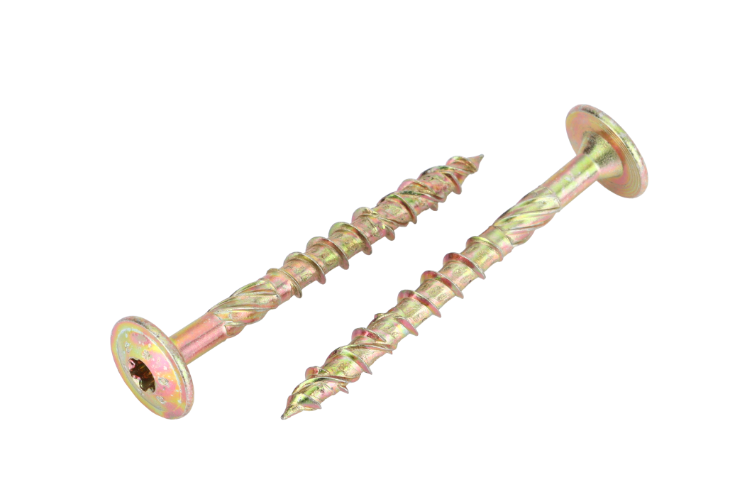
Core Types of Construction Fasteners and Their Structural Roles
Nails, Screws, Bolts, and Anchors: Functional Differences in Load Transfer
Different construction fasteners do specific jobs depending on how they handle force transfer. Take nails for instance they work mainly through friction and side resistance, which makes them great at resisting shear forces. That's why we see them so much in wood framing projects where wind or earthquakes might cause sliding movements. Screws tell a different story because of those threads along their shafts. These create strong clamping pressure and better resistance against pulling out when there's upward force or movement happening. When it comes to bolts paired with nuts and washers, these are built for situations needing tight tension control like moment connections in steel structures. The whole point is getting that precise pre-tension so joints stay rigid. Anchors come in various forms expansion, chemical, undercut and they all basically push loads into materials such as concrete or brick either through mechanical grip or chemical bonding. Getting the wrong fastener for the job can spell disaster. Using nails where tension matters most often leads to early failures and puts lives at risk in critical applications.
Specialized Construction Fasteners: Deck Screws, Carriage Bolts, and Concrete U-Bolts
Specialized fasteners integrate geometry, material, and surface treatment to meet niche structural and environmental demands:
- Deck screws combine self-drilling tips, coarse threads, and stainless or ceramic-coated finishes to resist corrosion while maximizing withdrawal resistance in pressure-treated lumber exposed to rain and freeze-thaw cycles.
- Carriage bolts feature a smooth, domed head and square neck that bites into timber during installationâeliminating rotation and enhancing shear capacity in exposed timber-frame joints without requiring access to both sides.
-
Concrete U-bolts, typically hot-dip galvanized or 304/316 stainless, anchor pipes, conduits, or structural brackets by distributing load across a broad embedment zone in cured concrete, minimizing localized stress and reducing crack propagation under vibration or thermal cycling.
Selection hinges on evaluating exposure severity, substrate behavior, and the primary load vectorâshear, tension, or combined actionâto ensure service-life compliance with building codes like ICC-ES AC193 and ASTM A307/A325.
Material Selection for Corrosion Resistance in Diverse Building Environments
Galvanized, Stainless Steel, and Polymer-Coated Construction Fasteners: Matching Exposure Levels
The level of corrosion resistance varies depending on what kind of environment something will face. Hot dip galvanizing works great for indoor spaces or areas protected from harsh weather conditions where moisture levels change but there's little contact with saltwater. When dealing with coastal regions or places that use road salt during winter months, 316 stainless steel becomes the go to material. This grade contains around 2 to 3 percent molybdenum which makes it much better at resisting damage from salt water corrosion compared to other steels. Tests under ASTM G48 standards back this up. For really tough chemical environments like those found in wastewater treatment centers or research labs, polymer coatings make all the difference. Fasteners coated with materials such as PTFE, epoxy, or nylon create protective layers that stand up well against acids, bases, and various cleaning agents. These coatings pass rigorous ASTM B117 salt spray tests, showing they can handle extreme conditions over time.
Corrosion-related failures cost industrial projects an average of $740k annually (Ponemon Institute, 2023), underscoring that material selection is both a durability and financial risk-mitigation strategy.
| Exposure Level | Recommended Fastener | Key Advantage |
|---|---|---|
| Mild (Indoor/Dry) | Hot-dip galvanized steel | Cost efficiency + proven longevity in low-aggression settings |
| Severe (Coastal/De-icing) | 316 Stainless steel | Reliable chloride resistance backed by decades of field performance |
| Chemical Splash Zones | PTFE/Polymer-coated | Chemically inert barrier; maintains integrity under sustained exposure |
Avoiding Galvanic Corrosion: Best Practices for Mixed-Metal Applications
Galvanic corrosion happens when different metals touch each other while there's moisture around, like after a rainstorm or when condensation builds up. This creates something like a tiny battery effect that makes one metal break down faster than normal. To stop this from happening right from the start, designers should keep metals apart by putting non-conducting materials between them. Things like rubber gaskets, plastic washers, or even special greases work well, particularly where aluminum meets steel parts. If metals just have to come together somehow, then bi-metallic washers make good sacrificial layers that take the hit instead of the main components. For material selection, look at the galvanic series chart (ASTM G82 standard) and pick metals that are no more than about 0.15 volts apart. So 316 stainless steel goes nicely with titanium, but not so much with regular carbon steel. On important projects like bridges, docks, or old buildings getting updated, install proper cathodic protection systems with zinc or magnesium rods. These need testing according to NACE SP0169 guidelines too. And don't forget to bring in someone who knows corrosion science when planning any retrofits. They can check what's already there before adding new fasteners or connections.
Load-Bearing Performance: Aligning Construction Fasteners with Structural Demands
Shear vs. Tensile Strength: How Geometry, Installation Method, and Substrate Affect Reliability
Getting structural reliability right means aligning fastener specs with how loads actually travel through a structure. Shear strength basically tells us how well something holds against forces running along the same plane as the joint itself. This matters a lot for things like beam to column connections or when securing diaphragms. Tensile strength works differently though it's all about resisting forces trying to pull parts apart. We see this in roof anchors designed to fight uplift or those little guys holding up suspended ceilings. The shape and design make these differences possible. Longer unthreaded sections boost shear capacity because they grab more material around them. Fine threads combined with bigger minor diameters give better grip for tension loads. How we install these fasteners makes just as big a difference. Too much torque can cut tensile strength down by almost half thanks to stripped threads or brittle metal changes from overworking during installation. Not enough torque creates problems too since joints might start slipping after repeated stress cycles. What kind of material we're anchoring into determines embedment needs. Concrete anchors need certain clearances and depths according to ACI 318 Appendix D guidelines. Wood fasteners have their own rules based on wood type density and moisture levels outlined in the National Design Specification. Industry reports indicate that about 30% of failures in stressed connections come from mixing incompatible materials and fasteners. This highlights why proper engineering matters beyond just picking parts off a shelf. Third party testing standards like ASTM F3125 for structural bolts or ICC-ES AC232 for mechanical anchors help verify actual capacities so engineers can make informed decisions when specifying components for projects.
FAQ
What is the main purpose of nails in construction?
Nails are primarily used to resist shear forces in wood framing projects, making them ideal for areas likely to experience wind or earthquakes.
How do bolts differ from nails and screws in construction?
Bolts, when used with nuts and washers, are designed for tight tension control, particularly in steel structures, ensuring precise pre-tension for rigid joints.
Why are 316 stainless steel fasteners preferred for coastal regions?
316 stainless steel is preferred for coastal regions due to its enhanced corrosion resistance from saltwater, thanks to its molybdenum content, reducing damage over time.

